Wednesday, July 30, 2014

Get It and Forget it! (No, Seriously, Don't)

Many of us have a habit of 'buy and hide' when it comes to emergency gear and supplies. I think we're all guilty of it at some point: finding gear you're excited about, purchasing it happily, take it out of the packaging, fiddle with it for a few minutes, and then tuck it away in a bag, box, or drawer and completely forget about it.

I strongly advise against such habits, whether it's intentional or not. Consider this scenario: you have an emergency that requires you to grab your kit and go, and you actually have it together! However, the time comes to use it and you quickly discover that some parts of your gear are already broken, feel flimsy and will break soon, or you are completely unfamiliar with how to use them. Now you not only have the stress of the emergency on your mind, but you are also stressed that you are almost as helpless as you would have been without a kit to begin with.

I may be preaching to the choir, but if I don't talk about it there's bound to be someone who falls ill to this condition. Therefore I say unto you, when you buy gear, PLEASE, take it out of the package, read its instructions, handle it, familiarize yourself with it inside and out, and, take it out for field trials. This will obviously help you have the knowledge you would need later to use it properly, and will help you determine if you should keep it in your kit or work on finding something better. I find this to be very true with such items as knives (including multi-tools and machetes, always a painful letdown), ponchos, and FLASHLIGHTS!! (can't stress that one enough). Also, sleep is VERY important, so make sure your sleeping arrangements are adequate! 

So get out there and try it all out! And if you'd like to share some of your findings, feel free to comment below!

Thursday, July 24, 2014

5 Simple But Most Useful Tools to Keep Around

It's time for another list!!!
I'm a definite advocate of always using the right tool for the job, which often means having a plethora of tools in your collection. I can't tell you to go buy every tool you can get your hands on (Sorry, men, I can't be held accountable to your wives for a tool-buying binge!), but these five tools should get you through most issues.
As with each list, you get what you pay for. Do your research and determine how much you are willing to pay for what quality you want. I advise getting these and keeping them in a small box or pouch that goes where you go, or even in your emergency kit. Let's begin...

Multi-function Screwdriver
There are too many types and sizes of screwdrivers to worry about carrying around each individual one. Good news: they make screwdriver handles with interchangeable bits! I found one at Lowe's for about $8 that has 12 different bits plus a magnetic extension. The other great thing about these is that the bits are universal in joint size, so if you want to customize what bits you carry around you have every freedom to do so.

Adjustable Wrench
Another item that shrinks a full set down to one item. Go with a medium size that can span to at least a 1-inch opening. The only drawback to these is that they don't hold on quite as tight as a fixed wrench, but they are still incredibly useful on the fly.

Slip-joint Pliers or Tongue-and-Groove Pliers
Choose which you like best. Both are suited for multiple uses. The tongue-and-groove have more applications, but tend to be bigger. This is a factor to consider when working out available storage space and work space. The slip-joint are smaller and simpler to use, and consequently have more limited function.

Knife
A good folding, locking blade knife always has a place on my person, but also goes great in a tool kit. I have no preference over serrated or non-serrated blades (I like both), so no suggestions for you there. More than the previous tools, these really are a 'you get what you pay for' item. Just know that a good knife is indispensable, and their uses are infinite.

Flashlight
I can't tell you how many times I've gotten into projects and wished I could see better what I was working on. There are so many types of flashlights out there that it's hard to choose what kind best suits what you think you'll need it for. I work on my own vehicles and printing presses at work, so I picked up a multi-LED light with a magnetic clip. It allows me to hang it so it shines where I need it without taking up a hand. However, you may find that a head lamp or a conventional flashlight suit your needs better. In any case, something is better than nothing, so even a $3 light from Wal-Mart would be so helpful to have around. There are some incredibly high-priced lights out there, and I have found the cheap ones tend to die too soon. So, again, do your research and figure out what you're comfortable with.

Honorable Mentions
It's hard to limit yourself sometimes, so here's the brief list of runner-ups that are great to have, but just not quite the Top 5
Claw Hammer- great for bashing and prying!
Locking Pliers- excellent for gripping and torquing power!
Tape Measure- never know when you need to measure something.
Needle-Nose Pliers- good for hard-to-reach and pinpoint applications.
Ball Point Pen- Not usually considered a tool, but an excellent partner to any project, seeing as we humans are quite the forgetful lot!

Thanks for reading, hope it was helpful!

Thursday, July 17, 2014

Getting Started with Food & Home Storage

Powerful Tornado - destroying property with lightning in the background - stock photo
You can't talk about preparedness without talking about food storage. While there is a ton of information out there about how to build your food storage and what all you should include in your food storage, lets just start with some basic stuff that you can do now to be prepared with a basic supply of food.


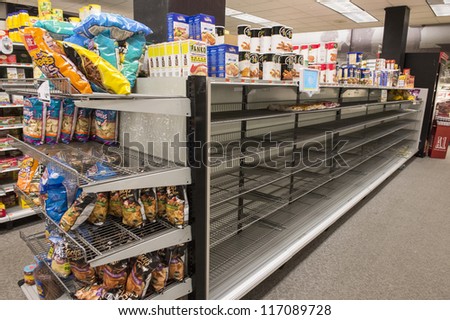
I think a lot of people get caught up in trying to build a years supply of food and thus they get overwhelmed and give up on food storage. While I do recommend a years supply, that is not what you should be thinking about when starting out. When thinking about starting your food storage, think about reasons that you might need it. Those reasons are different for each of us dependent upon where we live. For most of us, the number one reason for building food storage is natural disasters. Think about it, how many times do you see the shelves cleared off at the grocery store? It's usually before a huge storm, mainly snow or hurricanes, and people come flocking because they don't have any of the stuff they might need on hand. What happens if you get there too late... to bad you are out of luck. So, here are a few good ways to avoid those horrendous lines and the stress of worrying about having the supplies to get you through those natural disasters.NEW YORK - OCT 28 : At many local groceries shops in Manhattan the shelves had been picked clean due to the arrival of Hurricane Sandy on October 28 2012 in New York. - stock photo

First, get some water storage! Water will be the first thing you need so make sure you have a couple of different options. A good water filter will help. A cheap way to clean your water is to buy the iodine tablets. You can find those at any Walmart. Another thing to remember is that when you know ahead of time of a potential disaster it is a good idea to fill up your bathtub with water. That should provide you with about 50 gallons of fresh, clean water. They also make bathtub plastic liners for this that even have a spout so your water will be guaranteed clean. Another way would be to save 2 liter bottles and juice bottles, clean them out with a little soap and water, then fill them up with fresh water and store. Don't use milk jugs, they eventually break down and you are left with a huge puddle wherever you store your water. If you have a basement, store it there, otherwise the garage will do for water, don't store food in the garage. 50 gallon barrels are also good options for storing water, though you need a good place to put those large bulky tanks. Just make sure that you have either a spout or a way to get water out of them because tipping them over isn't going to work out well. The last option for today is buying bottled water. I never buy bottled water unless I can buy it for less than 10 cents per bottle. Just keep an eye on store ads, they throw them on sale often, especially during the summer.
Canned goods on wooden storage shelves in pantry - stock photoNext is food storage. A lot of people like to run out and buy a bucket of wheat and beans and think that they have their food storage. Well, if you go straight from your regular diet to nothing but wheat and beans because that is all you bought, you have another thing coming! That stuff will tear you up! If you can integrate that stuff into your diet now, you will be much better off, and healthier for that matter. The easiest way is to look around at what you already have and what you already eat and just buy more of it. You could even plan out meals for a month and then work on getting the supplies over time. I like to look out for sales at the store and then buy a little extra. Most of these type of items will last 3-5 years. If it comes in a box, transfer it to a bag, or just make sure that you eat it. Food rotation is a great way to keep your food storage current. So, hit the sales hard and buy something extra each time you go shopping. This will help you avoid sticker shock and build your storage for just a few bucks a week.

The last thing on the list for today is home storage. Toiletries and medications are probably the most important things under home storage that you can have on back up for an emergency. The good thing about toiletries is that they go on sale and there are always coupons for them. Once my sister got like 300 boxes of band aids for free by using coupons. While I don't promote extreme couponing, it does have it's benefits if you have the time and energy for that. If you have children, it is always a good idea to have extra diapers and children's medication like Tylenol and ibuprofen. For adults it is a good idea to keep some aspirin on hand, just in case of sudden heart attack. If you ever get a prescription for nausea medication like Zofran from your doctor, FILL IT! and keep it on hand. Before modern medicine, people died all the time from dysentery, so if something ever happened where we didn't have that luxury, nausea and diarrhea medicine could be a life saver. Same with fever medications like Tylenol and ibuprofen.

So, make a list of some things that you don't have in your home and food storage that you would like to have. Then start buying stuff slowly. Don't go into debt to buy home storage. On the other hand, don't wait until it's too late to start getting the stuff you need. Be Prepared and be smart!

Monday, July 14, 2014

Faith- The Basics of Spiritual Preparation

Flickr Photo by Danny Bruce
Good Scripture for us all to think about!
The foundation of being prepared starts with spiritual preparation. At the heart of spiritual preparedness is faith. Faith in what exactly? Well, I'm a Christian and I'm talking about faith in God and that God has a greater plan for each of us than we realize. So whether it's God or whoever you call your Supreme Being, but believe you me, there is a God in heaven who loves us and wants us to be happy. If you doubt the existence of such a being, look around you! Stop and smell the Roses! There is no way that all of this just came about in coincidence. Our bodies didn't just develop into what it is from amoebas. There is a Divine plan! Just look at people who have fought in wars or been in the midst of natural disasters. What happens to all of them.... they turn to God and plead for help and guidance. So why is it that when faced with death or hardship people tend to turn to God? It is because deep inside, when you take out the worries of this world and the possibility that this life is over hits you, we all know that death is not the end. If death is not the end, then what is next? This is where faith steps in.

Faith in God and that he has a plan for each of us is what will help you through the trials of this life. Whether it is a difficult time in your life, something unexpected happens, or it's the time when "it" hits the fan, having faith is what will get you through. You realize that God only allows things to happen to you because it is an opportunity for you to grow and become more like Him. It is an opportunity for you to gain experience so that you can help someone else in their moment of need. We were created that we may have joy, and joy can be found in any situation if we have faith in His plan.

So, my hope is that together we can strengthen our faith and be able to withstand the storms headed our direction. As we get closer to the Second Coming we know that things will only get worse, but if we are founded on the Rock, we will never falter. I pray that we can strengthen each other and keep Satan from destroying our families and our faith.


Flickr Photo by f/orme Pet Photographyf/orme Pet Photography

Saturday, July 12, 2014

Mental Preparation

Flickr photo by thinboyfatter
In any event where there should be adequate preparation, the most important preparation you can have is mental preparation. You have to have a plan ahead of time to help you make the right decisions when things are going crazy or something unexpected happens.

Some things are just a matter of making the decision beforehand like we were all taught in the D.A.R.E. program. I will not do drugs. I will not smoke. I will not drink. If you have that in your head ahead of time, when the offer comes, it is easier to turn down. The same goes with the rest of life. I will not spend over $X. I will not lie, cheat, steal... etc. Most importantly, for any situation, I will not freak out! Maintain your composure! Should you find yourself in a survival situation, stay calm! There are a million and one picture posts on Pinterest with the "Keep Calm" theme. Create your own themes. No matter what your kids do, what your boss does, what people at work do, or what random people around you do, remember to keep calm.

 It is easy to let emotions get the better of us and when they do, we generally end up regretting the result. For instance, I am an ER nurse and sometimes I see patient who come in with massive trauma. If a patient comes in from a car accident and there is blood everywhere from glass in their arm and their foot is broken sideways, it is easy to concentrate on that. In nursing however, we remember that the ABC's are the most important. Airway, breathing, circulation. The patient may be bleeding and their foot looks awful but if he isn't breathing then none of that matters. So, maintaining composure helps you to think clearly and remember your training. The same is true with fighting and survival.

Mental preparation starts with developing plans for possible situations. Having plans for various natural disasters that could happen in the area you live in is a good start. The next step would be practicing those plans. That is the training aspect. If you help your family to be trained for a disaster, they are less likely to freak out when it actually happens. This is why it is important to practice survival skills as well. So that when the situation arises, you can remember your training that is real, not something you vaguely remember from reading in a book once.

So, make a plan. Start today by thinking of real possible situations your family could encounter and then make a plan of action for how to handle that situation. Next, start training! This is where the knowledge will get ingrained into your brain and you will be able to keep calm and use that knowledge when the time comes. The time will come and when it does, you will be thankful.

Wednesday, July 9, 2014

Top 5 Automotive Items to Keep in Stock

A young man adding oil to his car at the end of an oil change. - stock photo


This list is designed to be like a car-savings; to be used as needed for any scenario from preventive maintenance to complete societal shutdown. These are also in order based on my opinion, not some set of surveys or other data, and are in order from most important to the least.

1. Motor Oil and Oil Filters
More than anything else, the engine oil NEEDS changed periodically. Failure to do so will result in catastrophic engine failure, and without your engine you aren't going anywhere. I'd recommend keeping 2 oil changes stored away, so find out how much oil your vehicle requires and buy accordingly.

2. Other Necessary Fluids
A good portion of the systems your auto needs to run rely on some kind of fluid. This includes engine coolant, transmission fluid, brake fluid, and power steering fluid (in that order of importance). In many vehicles, automatic transmission fluid (atf) is used for power steering fluid. I'd recommend 1 gallon of pure coolant and a spare jug for mixing (it costs less than buying pre-mix), 4 quarts of the appropriate transmission fluid for your vehicle (there are several different types, yes it's crucial) and one bottle each brake and power steering (there are also several types of these. Refer to your owner's manual or simply ask your auto parts store clerk to look the types and quantities up for you).

3. Serpentine/V-Belts
These are standard scheduled maintenance items, and since they drive all your necessary components (such as the water pump, alternator, and power steering) it's nice to have one handy in case one breaks. I'd recommend keeping one at a time, and keep it in your vehicle with the right tool(s) to change it.

4. Water Pump and Thermostat
Keeping the engine cool is about as important as keeping it lubricated. Thermostats are pretty cheap (around $10-15) but water pumps are a little more (the cost varies greatly between vehicles). One of each, with the appropriate gaskets, should do nicely.

5. Brake Pads/Shoes
Stopping is obviously more important than going, but it's a lot less complicated. Brakes wear out, it's a fact. Pads/Shoes are usually pretty cheap, and these days you can get lifetime warranties on them. It sounds silly, but if you make sure you get those, register them with the store, and bring them in when they wear out they really will replace them free of charge. These are also sold in pairs so that you have enough to replace all the pads on one axle. I'd recommend one set per axle to store.

It's important to note that as inflation increases, or if we do have an economic collapse, oil prices will be the first to skyrocket. Since motor oil and other fluids are typically petroleum based, they will go up in price at about the same rate. That being said, it'd be a good idea to grab numbers 1 and 2 sooner rather than later.
 We'll discuss how-to's later.

Monday, July 7, 2014

Financial Freedom

Bills and finances
 Alright, lets get down to business! We have all heard that money talks, but it is a conversation that most of us try to avoid. Unfortunately we all have a love hate relationship with money. We need it to fund our lives and to buy all the cool stuff that we want to be prepared for the future, but it is something that most people find awkward and try to avoid because it causes tension in our relationships and it usually means some sort of restriction. Boo Hiss!!

So how do you deal with the elephant in the room? Tackle it head on! There is no use trying to go around it because it will end up biting you in the end. I could go on and on about budgeting and ways to get out of debt ad nausea but let me just give you a few pointers that I have found helpful. For additional financial advice I recommend checking out my Be Prepared board on Pinterest. I found some really cool stuff on there that is very easy to apply and follow. Remember to just search prepared4this.

The first step is to be informed. Most of us don't use cash anymore, it's all on debit card. If you can use the cash and envelope system, by all means, go for it because it is probably the most effective way to manage your money. The nice thing about debit cards is that all of your spending is trackable. Courtesy of the digital age you can instantly go online and see exactly where all your money went. Most bank websites can even separate your spending into categories which makes it really easy to plug into a budget because you know exactly how much you are spending on gas, groceries, eating out, entertainment, etc. So get on your banks website and check out where your money went in the past 30 days, you might be surprised. Then make a habit of checking it daily. The more you check, the more you will realize how much you are wasting, and you will make better buying decisions. Like I've said before, knowledge is power. I don't care what kind of budget you live on but by doing this, you will find ways to save and be able to get the things you need.

Step #2 is to stop impulse buying! STOP IT NOW! Set a limit before you go out. Set a specific dollar amount and don't buy anything that costs more than that amount without waiting at least a few days and doing research on it. More often than not, if you look around, you will find a better deal somewhere online. It never fails that when you buy something big you end up finding it for a better price right after you buy it. There is research out there for when the best time of the year is to buy stuff so just hold off the urge, be patient, and wait! Your wallet will thank you for it!

The last step of the day is to pay yourself. Allow a small amount for play money with each paycheck and get that in cash. Once it's gone, it's gone! This will help you to stop impulse buying and will help you to feel freedom to get those extras that aren't in your budget. Another part of paying yourself is paying your savings account. You need a financial reserve. Let me say this again, You NEED A FINANCIAL RESERVE! Rainy days will always come, but how will you handle it? Credit card? Don't always count on that one, and besides you have to pay it off anyway but you end up paying interest up the wazoo! Do yourself a favor and build that savings account.

The bottom line is that this is an impulsive, self centered world and if you want financial freedom, you have to get over that. Self serving buying only benefits one person, The Man. Stick it to the man and show him that there is a God greater than he is and that you are going to take better responsibility for the things that God has given you. Recognizing where it all comes from and thinking about how He would have you use it will help you make better choices that lead to greater happiness and preparedness.

Tuesday, July 1, 2014

Ebola Outbreak


Digital illustration of Ebola virus in   colour background - stock photo


You may or may not have noticed that there is an Ebola outbreak going on in Africa right now. I'm not sure why but the news hasn't really covered much on this outbreak. That fact in and of itself is kind of scary especially considering that this is the largest Ebola outbreak in history and now spans three countries. So far there have been well over 600 cases with almost 400 deaths and authorities are struggling to contain it mainly because of the fear that the people have of the foreign healthcare workers and their distrust of their governments. On top of this people are actively trying to get away from quarantine zones and are even running healthcare workers out of town in some places. There are also at least 30 people who are confirmed to have Ebola who are missing! I mean, can you blame them? Who wants to spend their dying days in the confines of quarantine, and when you see that most of the people who go into those zones never come out, you would be suspicious too. To add to the chaos, the burial tradition of the people in Africa is very intimate and contributes significantly to the spread of the disease. Bottom line... it's a mess, and there is always the threat that Ebola, or any other deadly disease for that matter, could come knocking at our doors, and if it does, will you be prepared for that?

So you may wonder, what is Ebola? Well, it is a virus that is spread through blood and bodily fluids. That is the good news! Think about it, it is spread the same way that HIV or Hepatitis C is spread and those are already around us and you aren't dying from that and you don't see people in mass randomly getting it? So if we know that it is transmitted by bodily fluids all you have to do is avoid that! The problem is that Ebola causes internal hemorrhage and throws your body into a clot disorder called DIC which is very difficult to treat. This causes the internal organs to melt and for you to bleed from every orifice, thus making it difficult to avoid contact with bodily fluids. The bleeding is also at the end stages of infection. To start out you experience flu like symptoms for up to 3 weeks before bleeding starts. Well who doesn't get flu like symptoms occasionally? So you start having a cough, nausea, vomiting, fever, generalized weakness, and fatigue. Now it probably won't be all of those so lets just say you have some weakness, a cough, and some nausea. Is your first thought... O Crap! I have Ebola? Well if it is, congrats! You are probably a hypochondriac and you need to be evaluated! For the rest of us, we shake it off, maybe try some cold medicine, and maybe take a day or two off work. Keep in mind this would be in the beginning stages of and outbreak, I would hope once word got out that Ebola had come to a town near you, that precautions would be taken immediately with any signs or symptoms.

So how do you prevent it? During an Ebola outbreak, gloves and masks will become your best friend. The hard part to protect is your eyes because if someone is coughing and bleeding all over, it is possible that some form of bodily fluid will fly through the air and could land in your eye thus transmitting the disease. So if at all possible just stay away, but if not the take the precautions and make sure you don't get exposed. Also if someone had it and survived they could transmit the virus sexually for two months following infection. The likelihood of that is low since the mortality rate of Ebola can be as high as 90%. Luckily the outbreak in Africa right now is less than that but time will tell.Unfortunately there is no vaccine or real way to treat Ebola though there are some experimental treatments out there. They have made a vaccine that has worked in some animals but no FDA approved vaccine for humans. The only potential vaccine takes 6 months to work so by then it's too late.

My purpose here is to inform, not to cause fear. It should give us all great hope that it is only spread by bodily fluid contact rather than being airborne. This means you can prevent it just as you prevent HIV or Hep C. The panic of people should be the real thing to be worried about because people do stupid things when they are afraid. Knowledge is power so Be Powerful! Let us all pray for those affected in Africa and that those working to contain the outbreak will have success.