Monday, December 1, 2014

Help in Hard Times

courtesy of lds.org
Christmas is a good time of year to take a look around and see what you can do to help others. Many times when driving around in cities or even just shopping at the local super market, we get asked for help from someone less fortunate than ourselves. The iconic picture of a panhandler at the corner of an intersection comes to mind. While it is easy to look at them and say "You good for nothing dead beat, get off your butt and get a job! Stop drinking and doing drugs and you wouldn't have to be on the street bumming off of everyone else." The Savior said, "Judge not that ye be not judged." and "In as much as ye have done it unto one of the least of these my brethren, ye have done it unto me!" 
courtesy of Flickr.com
Trust me, I have seen enough people while working the the ER who are abusing the system that it makes me sick. My first thought when I see these people is not, "oh you poor unfortunate person, I want to help you." And I have turned my head and avoided eye contact many times with the guys on the side of the street. Mainly because I don't feel that giving them money helps at all. You know the whole, give a man a fish and feed him for a day but teach a man to fish and feed him for a lifetime. Well if I can't give them money, what else is there? Well giving them a job would be amazing, but not feasible for the average person. So, I came up with an idea that I think is great to help those less fortunate in life without giving them direct financial assistance if you are the type that is worried that they are going to waste it on drugs and alcohol. 

So, in the attitude of preparedness, prepare care packages that you can keep in your car to give to someone the next time you come across someone in need. For $40 dollars we made 5 care packages with a few items to help them get by (pictures show 4 because there were a couple items we didn't get 5 of but we mostly had a 5th bag pricing and idem numbers work out perfectly for 5, just remember to get 5 of the single items!). Keep in mind that you can make your own and put whatever you deem necessary in yours, this is just what we chose to put in ours. Any ideas would be greatly appreciated, just leave a comment. The main ingredient was food. The idea was, what if they are homeless, make it so they don't need dishes or other ingredients. A package of tuna, some slim jims, couple granola bars, a cup o ramen, some crackers, fruit, and something to snack on, in this case a Little Debbie Christmas Tree. We all enjoy a nice sweet treat, wouldn't something like that make your day if you were on really hard times and had nothing. We also included a wisp (tooth brush with the tooth paste in one) some hand sanitizer, some hot hands, and a package of tissues. Some other items that are options are first aid kits (wal-mart has a mini kit for $1) shampoo, or hand towels (you can get compressed ones at the dollar store that are about 2 square inches if that). We also decided to toss in a bottle of water. Last but not least is some sort of uplifting message. Being the Christmas season, we through in a #ShareTheGift card and will probably toss in something else before we hand it out. You could also throw in some cash if you felt the need. 

This is a simple way to be prepared to serve and uplift others. We are all equal in the site of God so don't look down to others who are less fortunate, but reach out your hand to lift them up! I challenge each of you to reach out and do something this holiday season to lift up those in need! 

#sharegoodness #sharethegift

Friday, October 10, 2014

Shut-In

So last week I heard about the first confirmed case of Ebola in America (in Dallas, TX) and a friend at work brought up a possible scenario. It goes something like this:
The hospitals and local governments will likely manage the quarantine poorly, and, since Dallas is a highly populated area, the disease could start to spread. Knowing our opportunistic government, it is likely they would call for a 2 week shut-in to "help stop the spread" by keeping people indoors. This would happen close around the November elections so as to keep people from voting.
That last bit is quite the speculation, but the idea of a two week shut-in got me wondering: "am I prepared for having to stay inside for two whole weeks, possibly without running water and electricity? What things would I need the most?"
Not too hard to figure on this one, but do we have these things lined up in case we get stuck at home?
Bottled water for drinking and extra water for washing
Non-perishable foods, such as canned and dehydrated (keeping water usage in mind)
Cleaning and sanitation products like soaps, hand sanitizer, disinfecting wipes, etc.
Any necessary medications and supplements to maintain immune health while living a likely dormant lifestyle         for two weeks.
Methods for disposing of trash and bodily wastes (especially without water, look into the bucket with                 sawdust).
Self defense methods and plan (for the crazies who don't mind helping spread the disease by trying to                 commit crimes when the police won't venture out).
Some methods of entertainment to keep up your spirits and the ability to stand your family (or roommates,           for that matter) for at least two weeks straight!

On that note, I keep hearing awesome things about COLLOIDAL SILVER and its abilities to kill almost EVERY harmful invader that can come into your body. Keep your eyes and ears open to where Ebola is spreading. Remember that it takes a couple days to a couple weeks to manifest, so don't take contact with others' bodily fluids (of any kind) lightly. No need for a preemptive shut-in either! Be safe, y'all!

Thursday, September 18, 2014

Choosing the Right Firearm

Personally, I don't think it's possible to call yourself prepared for much of anything without having a firearm. Firearms are great tools for both defense and securing food. Firearms in our day are like swords of old, everyone should have one, and those who don't will end up just like those who didn't back in the day when things hit the fan... dead! I don't care what your opinion on weapons is, but think about this for a minute. What happens when there is no Walmart to run to for food? If you are a vegetarian... good for you, you are very healthy, but I hope you grow a huge year round garden! Fishing and hunting would become a primary source of food for you and your family! You will also need to be able to protect what you do have from freeloaders thinking they can just take from others what they haven't taken thought of to provide for themselves. Our society has promoted a lifestyle that is dependent upon getting something for nothing. That mentality won't simply disappear when disaster strikes! So the question is... which one is right for you?

I'm not sure that there is a definite answer for everyone as to which type of firearm is best in your situation. Ideally, multiple firearms of different types is best, but the important thing is that you are skilled with what you have. Don't just buy a gun and put it away in your closet and expect to be an expert marksman when the time comes. Go shooting! Get comfortable with your weapon! Know it's limits and have plenty of ammo for it.

Some factors to consider when thinking about choosing your preferred weapon include, affordability, versatility, range, and ammo availability. Unfortunately most of us have budget restraints when it comes to buying guns. Often times though, you get what you pay for so find the best of both worlds. If you can't buy multiple guns, consider some that fit multiple functions. For instance, a shotgun is great for home defense and foul hunting, but you can buy different rounds for it such as slugs or buckshot that make it great for large game. AR-15's and AK 47's also fit into the versatile category because they are light and great tactical weapons but also powerful enough to bring down large game. Shotguns and 22's have the cheapest ammo and their ammo is widely available whereas specific calibers of hunting rifles will be more difficult to find ammo in a shortage. In the event of an invasion, what ammo would the invader likely use. Right now I would say, .223, .308, or 7.62x39, so using something that has one of those calibers would be beneficial. Pistols are great, concealable, and awesome for personal defense, but if it came down to using it for survival, good luck bringing down a deer or even a rabbit with one of those. Another thing to think about is how hard the weapon kicks. Are you afraid to pull the trigger because of the kick? Would that moment of hesitation for that jerk of the gun cause you to miss or be a deadly mistake?

In my humble opinion, that's right I said IMHO, I believe that a tactical 22 or AR-22 is the best all around, single must have gun. If you could only pick one, this is it! Here is why, first, the gun is very affordable and can generally be found for 3-4 hundred. I've seen them as low as $250 for a decked out AR-22. They go on sale, keep your eyes peeled! These guns are light and have ZERO recoil so even the wimpiest of women, or children could shoot them and not be scared. Ammo is CHEAP! and it can be found anywhere! It offers a good home defense ability as well as the capability to hunt. Get a good scope and get dead on with one of these babies and you could bring down a deer with shot through the neck or head. While it doesn't have the knockdown power of its .223 or .308 counterparts, your aim won't waiver with each shot so you could easily pump multiple shots out accurately and trust me, a .22 will still kill someone. The look also carries the fear of the higher caliber weapons. That is why this is my weapon of choice!

Sunday, September 14, 2014

Keep It Ready

I've noticed lately that it's really easy to let your kit fall apart after you've put it together, especially if it doubles as your camping bag. Getting practice in with your kit is a great idea, but it's equally important to REMEMBER to restock and reorganize it after use and periodically.

Also, keep track of expiration dates on the food and other consumable items in your kits and home storage. I'm sure I don't have to tell you how disappointing it is to open something you thought was fine to eat just to find it has long since spoiled, leaving you with an added burden instead of added comfort.

As for your gear, make sure you swap out clothing based on the seasons you're going into, and check them during the seasons for damage from insects or leaks from other items in your kit (had a buddy burner leak out in my bag once...). Any items that may require routine maintenance should also get your attention at this time, such as water filters that may need cleaning, metal equipment that would need oiling, or knives that would need sharpening and polishing.

Doing this kit maintenance will not only keep it fresh and ready, but will also keep you savvy on where everything is located in your kit, as well as keeping your knowledge of how to use it fresh on your mind.

IMPORTANT TO NOTE is the fact that a kit you keep in your car will expire many times faster than one you keep in your climate-controlled home. Changing temperatures cause food to expire faster and cause fabrics to break down. I've seen water resistant linings in bags crumble off and the cloth become almost transparent doing nothing but sitting still inside a vehicle. Decide now if you really want to leave a kit in your car (it is doable, but the right supplies for long term storage will be harder to procure) or if it's feasible to bring it inside with you wherever you need it to (mainly work).

Wednesday, September 3, 2014

How to Not Become Part of the Problem

We've all seen them on the news: those people who have either taken to the fetal position or have become criminals of opportunity in the face of an emergency. Looters, violent protesters, and gangs tend to only add more tragedy to tragedy. The unprepared, in essence, do the same. Both groups make recovery operations much harder for everyone, themselves included.

We always talk of having your supplies ready and knowing how to use them so I'll spare your eyes that trouble for now. Just note that being wise with your supplies doesn't always mean hoarding them away to only be used by you and your family.

Witnessed in infamous incidents such as Hurricane Katrina and Ferguson, Missouri are the opportunists. These predators seek to gain benefit from a disaster instead of using their time and energy to help get through it. I hope I'm preaching to the choir when I talk of this, but the concept that a confusion in law and order is a green-light to commit crimes is WRONG! This behavior makes it more dangerous and time-consuming for emergency crews to enter affected areas and perform their much-needed jobs to restore order and livability for citizens like you and I. On the other side of this coin, it would not be wise or helpful to go out into the streets as an armed vigilante to try and do the "peacekeeping" by yourself either.

If you want to go a step beyond not becoming part of the problem the next logical step is to become part of the solution. Check with your local government to see about becoming part of their Community Emergency Response Team (CERT). The training from this program teaches you how to handle basic emergency equipment and different things you can do to aid emergency crews, such as going door to door and marking homes for wounded and casualties.

It's your choice where you want to stand on this spectrum, but make up your mind ahead of time, because fence-sitters don't help either!

Thursday, August 28, 2014

Safe Places

The world we live in is crazy and at a moments notice, it could all change. The truth is, no matter where you live, we are all susceptible to natural disasters, diseases, and financial downturns. Because we all have these vulnerabilities, we should each establish a safe place both within our house and a distance away from our home. In every emergency plan a safe place is outlined where those involved should go to seek refuge. In earthquakes we flock to doorways, under tables, or outside. In fires go to the neighbors house, just across the street, or the big tree by the light post. If a tornado or earthquake hit do you know where you would go? What about in the event that there is civil unrest or something worse? Would you hunker down or hit the road? These are serious questions we all need to ask ourselves. If you lived in Ferguson, MO what would you have done?

For the most part, emergencies happen in our homes. Weathering storms and other natural disasters, losing a job, and most other situations requiring preparedness will happen at home, or they it will happen somewhere that you have your vehicle close by. This is why it is important to create a safe place in your home and have a bug out kit in your vehicle. Ideally pick out a room in your house that is a central room with no windows. Basements are great, but if you don't have one, you can improvise. If you don't have a spare room that you can store things in, consider making a closet a storage area and have everything in it easy to move to a bathroom or another safe location. Make this space like a room size safe. Keep important documents there. Another good spot for important documents is in the freezer. They will generally be protected from fire in the freezer and you are less likely to lose them. Keep a gun and ammo in this room, along with your 72 hr. kit, food, water, first aid kit, and you may even want to consider making a box that is EMP proof and store some electronics in it like old phones, an external hardrive, hand crank cell phone chargers and flashlights, a ham radio, and the list goes on! Bottom line, make this room your safe room where if the rest of your house got wiped out, you would have everything you need in this one place. I'm not saying put it all in one place, because it's a good idea to have more than one of many of these things, but have at least one of everything in a central location.


I suggest making a grab and go kit as well. Go to a thrift store or garage sale and find some old luggage with wheels on it that you can store a food grab and go and a supply grab and go case. Its a good idea to keep important documents and other survival supplies like a water filter, fire starter kit, knives, something to cook with, rope, compass, first aid kit, gun, extra cash, and whatever else you deem necessary in your grab and go case. You should be able to fit at least a good week's worth of food in a case. Then you should have a 3rd case with clothing for all seasons but especially make sure you have winter clothing. The farmer's almanac this year is predicting a colder than normal winter for most of the U.S. and we all saw the chilling effects of the polar vortex last year. Be prepared! You never know when you might have to bug out.

Since the possibility of bugging out exists, where would you go? How would you get there? If that route was compromised do you have an alternate, or an alternate safe place? These are all questions we need to ask ourselves. Mom's house might sound like a great idea if she lives in a big city, you live in the country, and an ice storm is headed your way, but if there was a huge disaster and all the inner city folks are looking for food, being in town is not a good idea. What if you had to go out of state? The truth is that there are a million and one possibilities of what could happen. Plan on a couple of options and evaluate them. Ask every question you can think of and categorize each place so that when disaster strikes, you have a plan and you know where you are going to go and how to get there.

Wednesday, August 13, 2014

Pandemic Prep

So I know there is a lot of fear out there about the threat of an Ebola pandemic. I'm not so sure that Ebola will be the world wide pandemic that wipes out a third of the population but I could easily see a mix of diseases combined to change the world as we know it. The fact is that parts of the world have evolved to a point where certain diseases have a difficult time spreading thanks to hygiene, technology, and immunizations. On the other hand, other parts of the world make it very easy to spread. Take Ebola for example, it thrives in Africa, and heaven forbid it ever hits India, but here in the majority of the United States, I don't think it would spread too easily. I do think that it is stupid that they are taking Ebola patients out of Africa in search of better treatment. I think the risk is too great, I don't care what hospital they go to. Just look into hospital acquired infections and you know this is a bad idea. But, with the traveling capabilities we have in the world, it's only a matter of time before something gets spread to an area that is not prepared for it.
Flickr photo by U.S. Pacific Command

The question is, how do we prepare for a pandemic, that could be anything, and not live in fear. Well, the best way is to be generally prepared for the most common types of diseases. The good news is that protection for most diseases is the same. Personal protective equipment (PPE), as we call it in the hospital, generally consists of gloves, masks, and a gown. The combination will protect you from almost any communicable disease. The only thing I can think of that you wouldn't be protected against would be rabies or in the event of a Zombie Apocalypse, human bites. However it is important to remember that not all masks and gowns are created equal. Here  is a link to a good mask that protects against airborne diseases. Here is a link to impervious isolation gowns.  And check out these gloves that will protect your hands from anything, they also come in black if you want a cooler color.

Now is the time to develop good habits. We have an obsession with touching our faces. Start being conscious about where you put your hands. Carry hand sanitizer with you. Put masks, gowns, and gloves in your car as part of your car's first aid kit. Remember to wash your hands and be careful when others around you are coughing or look sick. This is just good practice even for common colds and the flu. It is good to point out that the flu kills thousands of people each year so don't take it lightly. So be careful out there, you never know what someone may have.

Thursday, August 7, 2014

Got It? Now "Get It"

In my last post I talked about how not to "get it and forget it." I'd like to expound on that thought for a minute to include the other areas of preparation. I ask, what good is acquiring ANYTHING if you don't know how to use it? Behold, I say unto you, there is no good. Leaving behind the physical we look at the other areas and things included therein.

Financial
In becoming financially prepared you tend to gather things like savings and retirement accounts, cash in a can, stocks, bonds, etc. Simply having these is not enough! You need to know the rules and how-to's of using them, and you need to have thought out a plan for when you would need to use them: what scenarios would call for it and, for example, when a complete withdrawal of funds would be appropriate.

Spiritual
Anybody can go to church, get baptized, and do the same thing every Sunday. There's much more than this to using and knowing your religion. If you're a Christian it's very important to remember that we are to obey ALL of the Lord's commandments, and there are quite a few! Study the Scriptures, learn what is asked of you (and more importantly, what has been done for you), and apply that knowledge. Make your religion something you ARE, not just something you do. This will make your soul prepared for the even the worst of times, for when you truly understand your faith you will find that the toils and strife of this world are merely for your growth and character, and will seem insignificant when you look back on it all in the next life (or even this one). One phrase I heard summed it up for me, "First, make covenants. Then, make swords."
Also, "But seek ye first the kingdom of God, and his righteousness; and all these things shall be added unto you." (Matthew 6:33)

Medical
Having first-aid kits is great and all, but do you really know how to use one properly? Even the smallest kits cover a dozen or more minor medical problems. Do you know which ones and how to identify them? Are you prepared in your mind to not freak out if you witness major trauma (or, for some, just a drop or two of blood), but rather have the ability and willingness to jump in and save life and limb? One great way to study first aid is the Boy Scout Handbook. It covers many basic emergencies and their treatments in good detail. It is, after all, intended to be understood by teenagers! If you want more advanced knowledge there are first aid courses taught by (I believe) the American Red Cross and the American Heart Association.

Remember, knowledge is power. Without it, you are obviously powerless, and that's the exact opposite of what we want you to be. Keep sharp, stay calm, and God be with you!

Wednesday, August 6, 2014

Live in the Now

Preparedness is a touchy subject and there are a lot of people who get freaked out by the 'Prepper' stigma. While I do believe in being prepared, I don't think I fit in totally with the Prepper crowd. I believe that we can all look forward to the future and that there are many exciting things that will happen probably sooner rather than later. Some might say the word 'exciting' is not the right choice, but if you see things through my eyes, there are a lot of things to be excited for. On the other hand, many people look to the past and dwell on the things that have happened that have led us to where we are. They are quick to blame others or themselves for the things going on in their life. Both of these options leave us wasting our lives worrying about things we have little or no control over. There is no point in dwelling on the past because you can't change it. Learn from it and move on! Don't let it bring you down! Today is a new day, enjoy it! Also, don't dwell on the future. The list of hypothetical situations goes on and on and could easily put anyone in the psych ward if all they did was think about what might happen. Don't get caught in this trap! Is it important to be prepared, of coarse it is, otherwise I wouldn't be doing this blog, but it is more important not to live in fear.

The only choices we really have any effect over are the ones we make today. This is what is meant by living in the Now. What are you doing right now? Is it building or tearing down your faith? Are you working towards something, or are you wasting time. Each day is a gift that we only get to have once! How will you look back on the time you have been given? Are you making the most out of the time you have with your loved ones or will you look back and see all the situations with your family and you were sitting there on your smart phone or watching a movie? As an ER nurse I have seen too many  people have their life cut shorter than they expected. Their families have one of two reactions. The first and most common is sadness and regret for things not done or said, and the second is one of acceptance and gratefulness for the joy they shared.

Regardless of the circumstances of your life, everything boils down to right now! Enjoy the moment and be with the ones you are with. Be present in mind and body, your family will love you more for it. Don't get caught up in all this noise that really doesn't matter. Find joy in every moment because that is why God created us, to have joy! One of my favorite quotes is,
 "You pile up enough tomorrows, and you'll find you are left with nothing but a lot of empty yesterdays. I don't know about you but I'd like today worth remembering." -Herold Hill
So go and make some memories!

Monday, August 4, 2014

The Importance of Physical Fitness

So, last week I decided to go mountain biking for the first time. My friends who invited me told me that I should have no problem going and that it would be lots of fun. I thought, sure, as long as I don't die, this could be a lot of fun and definitely a new adventure. I've been bike riding before. My brother and I used to go riding in Missouri on some hilly but paved trails. I was a boy scout and earned the cycling merit badge and as a boy scout leader I had been on trips with the scouts. On top of my past experience, I play soccer every week so I figured sure, I can do this. Well let me tell you, we weren't even a mile into the ride and I was dying! I'm thinking, "Oh my gosh, how on earth am I going to make it to the top." So I stopped for a breather and then continued on. I did eventually make it to the top but I was like 20 minutes behind everyone else. Coming down was the easy part, it's just have a seat and hold on for dear life. 

The whole time I was thinking about how on earth do I expect to be able to survive in whatever situation I may be in if I can't do this. I forced through and it was fun but wow, new respect for mountain bikers. I also got to thinking about all the action movies I love to watch. All of these guys end up in situations where they end up saving the world, but are any of them fat? NO! I mean, I know its Hollywood but still think about if it were reality, do you think the people who stand out and save the day are the ones who are unhealthy? About the only situation I can think of where it would be a good thing is that you have an extra calorie reserve to live off of if there were no food.

Living healthy is freedom! I'm glad that I was healthy enough to make it to the top and bike down without collapsing and having a heart attack. It allowed me to experience something new and to enjoy some beautiful scenery in the Rocky Mountains. Being healthy can allow you to do whatever you want to do without restricting your activities due to your physical abilities. It is very liberating to know that if you want to go hike a mountain, bike some trails, run a 5k, etc. you can! The things you see and do will be more than worth the effort it takes to get there.

Now, I'm not saying that we all need to get out there and become Mr. Fit. I'm just saying that the benefits of living a healthy lifestyle will allow you the ability to do anything you want or to help you endure anything that comes your way. Think of all the medical liability that comes with living off of McDonald's! Now I love me some fries, but do I need to eat them every day, NO! All things in moderation! And don't let becoming fit run your life. You need to stop and smell the roses too. I've done a few different programs over the years like Insanity, P90X 3, and T-25. While these have their benefits and definitely work, they take time and dedication. I also do some running and that's fun but most of all I love to play sports. That is my favorite way to exercise. The results come when you mix the exercise with healthy eating. Does that mean don't eat cake? No, I've got a nice sweet tooth and sometimes it gets the better of me but don't eat them every day. All things in moderation! The other thing that is needed is consistency. Regular physical activity will lead to a healthier life.

Today is the day to get started. Just start by making 1 healthier eating choice today. Cut out the sour cream, try italian instead of ranch dressing, or add a small salad or something green to a meal. Then go for a nice walk around the block and enjoy the beautiful weather. You will go to bed with a smile on your face for having made better choices today. Then keep it up tomorrow! I promise you, you will feel a difference.

Friday, August 1, 2014

Medicine for Mommies: Infants 0-3 Months

Flickr photo by Victoria Johnson 
Let me just start off by giving a disclaimer. If you feel like your child needs to go to the ER, then do it! Mother's intuition is more valuable than anything! Also, this is intended as advice, each child is different and each body reacts differently to different methods of treatment. I will not be responsible for anything that happens due to lack of proper treatment.

That being said, I am an ER nurse and I see a lot of parents that bring their children in when they don't need to. The awesome thing about children is that they are resilient. Infants under 3 months old are especially resilient in that it is very difficult for them to get serious infections or illnesses. This is especially true for breastfed infants. I'm a huge fan of breastfeeding especially during the first couple of weeks because that is when all of the mother's antibodies are given to the baby. This helps them to be immune to most infections. For first time parents, keeping your child safe is generally no problem. During those first few months you are especially protective of your child and barely take them out in public. The last place you should want to take them to is an Emergency Room, which is why you should avoid it at all costs. If you are concerned about your baby, call your pediatrician! They can usually work you into their schedule. If it's because you don't have insurance, you probably qualify for medicaid and there are always pediatricians accepting medicaid. ER's are loaded with germs. We do the best that we can to not spread infection, but when you have to sit in a waiting room with 30 other sick people, the chances are pretty good that you will be exposed to something you don't want.

So, what are some reasons why you would think your baby needs to go to the ER. The most common is for throwing up and diarrhea. For you first time parents, vomiting and diarrhea are a fact of life for infants. You try drinking nothing but milk and see what ends up coming out of you! But seriously, babies spit up all the time and their poop is runny. What you would want to worry about is if the child is projectile vomiting and unable to keep anything down. And when I say projectile, I mean explosive, we are talking that stuff is flying through the air, not just bubbling up out of their mouth. The main reason we worry about vomiting and diarrhea is because that causes dehydration. Some signs to look for in your infant of dehydration are no wet diapers and sunken fontanels (that soft spot on their head). I had a second time mom bring in her baby because the child had only had 4 wet diapers that day with no vomiting or diarrhea and she thought her baby was dehydrated. THIS IS NOT DEHYDRATION! Infants also fluctuate in how much they eat so just because they ate less for a day does not mean that they aren't eating. Be patient and see what happens the next day.

The next most common reason is for fevers. A fever is considered 100.4 F or greater. 97-100.3 can all be normal variants. Some important things to consider are the weather. If you have your infant in 2 layers and a blanket and it's summer, of coarse their temperature will be elevated. Dress them appropriately! Also the most accurate on an infant is a rectal temperature because their body hasn't quite got the temperature regulation thing down yet. So don't go off of feel, check a temp! Be prepared though, because if you bring your infant into the ER and they have a temperature greater than 100.3 they are probably going to get a septic work up done meaning blood work and even a spinal tap because they could have meningitis.

Flickr photo by Naval Surface Warriors
Lastly, coughs and runny noses tend to freak parents out. Occasional coughs and runny noses are normal. What you want to look out for is constant coughs or croup like coughs. You can probably find examples of croup on you tube. Most likely, your infant doesn't have it. If you notice that their nostrils are flaring and they are using accessory muscles like their ribs to breath, then you need to be doing something about it.

Also, if you want to avoid chances of infections, keep other people out of the babies face. People you especially need to watch out for are those random people at Walmart who think because you have a baby they have the right to tickle it and get in it's face and make goo goo faces to it, and you need to watch out for children. They don't tend to wash their hands and are exposed to lots of other stuff through normal interaction at school which is why they spread infection easier.

Wednesday, July 30, 2014

Get It and Forget it! (No, Seriously, Don't)

Many of us have a habit of 'buy and hide' when it comes to emergency gear and supplies. I think we're all guilty of it at some point: finding gear you're excited about, purchasing it happily, take it out of the packaging, fiddle with it for a few minutes, and then tuck it away in a bag, box, or drawer and completely forget about it.

I strongly advise against such habits, whether it's intentional or not. Consider this scenario: you have an emergency that requires you to grab your kit and go, and you actually have it together! However, the time comes to use it and you quickly discover that some parts of your gear are already broken, feel flimsy and will break soon, or you are completely unfamiliar with how to use them. Now you not only have the stress of the emergency on your mind, but you are also stressed that you are almost as helpless as you would have been without a kit to begin with.

I may be preaching to the choir, but if I don't talk about it there's bound to be someone who falls ill to this condition. Therefore I say unto you, when you buy gear, PLEASE, take it out of the package, read its instructions, handle it, familiarize yourself with it inside and out, and, take it out for field trials. This will obviously help you have the knowledge you would need later to use it properly, and will help you determine if you should keep it in your kit or work on finding something better. I find this to be very true with such items as knives (including multi-tools and machetes, always a painful letdown), ponchos, and FLASHLIGHTS!! (can't stress that one enough). Also, sleep is VERY important, so make sure your sleeping arrangements are adequate! 

So get out there and try it all out! And if you'd like to share some of your findings, feel free to comment below!

Thursday, July 24, 2014

5 Simple But Most Useful Tools to Keep Around

It's time for another list!!!
I'm a definite advocate of always using the right tool for the job, which often means having a plethora of tools in your collection. I can't tell you to go buy every tool you can get your hands on (Sorry, men, I can't be held accountable to your wives for a tool-buying binge!), but these five tools should get you through most issues.
As with each list, you get what you pay for. Do your research and determine how much you are willing to pay for what quality you want. I advise getting these and keeping them in a small box or pouch that goes where you go, or even in your emergency kit. Let's begin...

Multi-function Screwdriver
There are too many types and sizes of screwdrivers to worry about carrying around each individual one. Good news: they make screwdriver handles with interchangeable bits! I found one at Lowe's for about $8 that has 12 different bits plus a magnetic extension. The other great thing about these is that the bits are universal in joint size, so if you want to customize what bits you carry around you have every freedom to do so.

Adjustable Wrench
Another item that shrinks a full set down to one item. Go with a medium size that can span to at least a 1-inch opening. The only drawback to these is that they don't hold on quite as tight as a fixed wrench, but they are still incredibly useful on the fly.

Slip-joint Pliers or Tongue-and-Groove Pliers
Choose which you like best. Both are suited for multiple uses. The tongue-and-groove have more applications, but tend to be bigger. This is a factor to consider when working out available storage space and work space. The slip-joint are smaller and simpler to use, and consequently have more limited function.

Knife
A good folding, locking blade knife always has a place on my person, but also goes great in a tool kit. I have no preference over serrated or non-serrated blades (I like both), so no suggestions for you there. More than the previous tools, these really are a 'you get what you pay for' item. Just know that a good knife is indispensable, and their uses are infinite.

Flashlight
I can't tell you how many times I've gotten into projects and wished I could see better what I was working on. There are so many types of flashlights out there that it's hard to choose what kind best suits what you think you'll need it for. I work on my own vehicles and printing presses at work, so I picked up a multi-LED light with a magnetic clip. It allows me to hang it so it shines where I need it without taking up a hand. However, you may find that a head lamp or a conventional flashlight suit your needs better. In any case, something is better than nothing, so even a $3 light from Wal-Mart would be so helpful to have around. There are some incredibly high-priced lights out there, and I have found the cheap ones tend to die too soon. So, again, do your research and figure out what you're comfortable with.

Honorable Mentions
It's hard to limit yourself sometimes, so here's the brief list of runner-ups that are great to have, but just not quite the Top 5
Claw Hammer- great for bashing and prying!
Locking Pliers- excellent for gripping and torquing power!
Tape Measure- never know when you need to measure something.
Needle-Nose Pliers- good for hard-to-reach and pinpoint applications.
Ball Point Pen- Not usually considered a tool, but an excellent partner to any project, seeing as we humans are quite the forgetful lot!

Thanks for reading, hope it was helpful!

Thursday, July 17, 2014

Getting Started with Food & Home Storage

Powerful Tornado - destroying property with lightning in the background - stock photo
You can't talk about preparedness without talking about food storage. While there is a ton of information out there about how to build your food storage and what all you should include in your food storage, lets just start with some basic stuff that you can do now to be prepared with a basic supply of food.


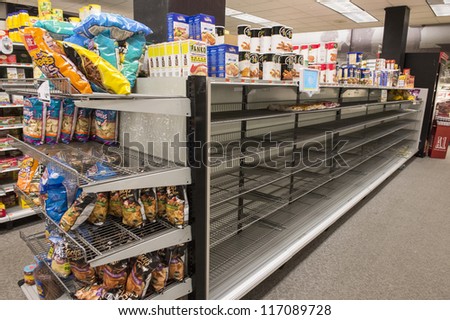
I think a lot of people get caught up in trying to build a years supply of food and thus they get overwhelmed and give up on food storage. While I do recommend a years supply, that is not what you should be thinking about when starting out. When thinking about starting your food storage, think about reasons that you might need it. Those reasons are different for each of us dependent upon where we live. For most of us, the number one reason for building food storage is natural disasters. Think about it, how many times do you see the shelves cleared off at the grocery store? It's usually before a huge storm, mainly snow or hurricanes, and people come flocking because they don't have any of the stuff they might need on hand. What happens if you get there too late... to bad you are out of luck. So, here are a few good ways to avoid those horrendous lines and the stress of worrying about having the supplies to get you through those natural disasters.NEW YORK - OCT 28 : At many local groceries shops in Manhattan the shelves had been picked clean due to the arrival of Hurricane Sandy on October 28 2012 in New York. - stock photo

First, get some water storage! Water will be the first thing you need so make sure you have a couple of different options. A good water filter will help. A cheap way to clean your water is to buy the iodine tablets. You can find those at any Walmart. Another thing to remember is that when you know ahead of time of a potential disaster it is a good idea to fill up your bathtub with water. That should provide you with about 50 gallons of fresh, clean water. They also make bathtub plastic liners for this that even have a spout so your water will be guaranteed clean. Another way would be to save 2 liter bottles and juice bottles, clean them out with a little soap and water, then fill them up with fresh water and store. Don't use milk jugs, they eventually break down and you are left with a huge puddle wherever you store your water. If you have a basement, store it there, otherwise the garage will do for water, don't store food in the garage. 50 gallon barrels are also good options for storing water, though you need a good place to put those large bulky tanks. Just make sure that you have either a spout or a way to get water out of them because tipping them over isn't going to work out well. The last option for today is buying bottled water. I never buy bottled water unless I can buy it for less than 10 cents per bottle. Just keep an eye on store ads, they throw them on sale often, especially during the summer.
Canned goods on wooden storage shelves in pantry - stock photoNext is food storage. A lot of people like to run out and buy a bucket of wheat and beans and think that they have their food storage. Well, if you go straight from your regular diet to nothing but wheat and beans because that is all you bought, you have another thing coming! That stuff will tear you up! If you can integrate that stuff into your diet now, you will be much better off, and healthier for that matter. The easiest way is to look around at what you already have and what you already eat and just buy more of it. You could even plan out meals for a month and then work on getting the supplies over time. I like to look out for sales at the store and then buy a little extra. Most of these type of items will last 3-5 years. If it comes in a box, transfer it to a bag, or just make sure that you eat it. Food rotation is a great way to keep your food storage current. So, hit the sales hard and buy something extra each time you go shopping. This will help you avoid sticker shock and build your storage for just a few bucks a week.

The last thing on the list for today is home storage. Toiletries and medications are probably the most important things under home storage that you can have on back up for an emergency. The good thing about toiletries is that they go on sale and there are always coupons for them. Once my sister got like 300 boxes of band aids for free by using coupons. While I don't promote extreme couponing, it does have it's benefits if you have the time and energy for that. If you have children, it is always a good idea to have extra diapers and children's medication like Tylenol and ibuprofen. For adults it is a good idea to keep some aspirin on hand, just in case of sudden heart attack. If you ever get a prescription for nausea medication like Zofran from your doctor, FILL IT! and keep it on hand. Before modern medicine, people died all the time from dysentery, so if something ever happened where we didn't have that luxury, nausea and diarrhea medicine could be a life saver. Same with fever medications like Tylenol and ibuprofen.

So, make a list of some things that you don't have in your home and food storage that you would like to have. Then start buying stuff slowly. Don't go into debt to buy home storage. On the other hand, don't wait until it's too late to start getting the stuff you need. Be Prepared and be smart!

Monday, July 14, 2014

Faith- The Basics of Spiritual Preparation

Flickr Photo by Danny Bruce
Good Scripture for us all to think about!
The foundation of being prepared starts with spiritual preparation. At the heart of spiritual preparedness is faith. Faith in what exactly? Well, I'm a Christian and I'm talking about faith in God and that God has a greater plan for each of us than we realize. So whether it's God or whoever you call your Supreme Being, but believe you me, there is a God in heaven who loves us and wants us to be happy. If you doubt the existence of such a being, look around you! Stop and smell the Roses! There is no way that all of this just came about in coincidence. Our bodies didn't just develop into what it is from amoebas. There is a Divine plan! Just look at people who have fought in wars or been in the midst of natural disasters. What happens to all of them.... they turn to God and plead for help and guidance. So why is it that when faced with death or hardship people tend to turn to God? It is because deep inside, when you take out the worries of this world and the possibility that this life is over hits you, we all know that death is not the end. If death is not the end, then what is next? This is where faith steps in.

Faith in God and that he has a plan for each of us is what will help you through the trials of this life. Whether it is a difficult time in your life, something unexpected happens, or it's the time when "it" hits the fan, having faith is what will get you through. You realize that God only allows things to happen to you because it is an opportunity for you to grow and become more like Him. It is an opportunity for you to gain experience so that you can help someone else in their moment of need. We were created that we may have joy, and joy can be found in any situation if we have faith in His plan.

So, my hope is that together we can strengthen our faith and be able to withstand the storms headed our direction. As we get closer to the Second Coming we know that things will only get worse, but if we are founded on the Rock, we will never falter. I pray that we can strengthen each other and keep Satan from destroying our families and our faith.


Flickr Photo by f/orme Pet Photographyf/orme Pet Photography

Saturday, July 12, 2014

Mental Preparation

Flickr photo by thinboyfatter
In any event where there should be adequate preparation, the most important preparation you can have is mental preparation. You have to have a plan ahead of time to help you make the right decisions when things are going crazy or something unexpected happens.

Some things are just a matter of making the decision beforehand like we were all taught in the D.A.R.E. program. I will not do drugs. I will not smoke. I will not drink. If you have that in your head ahead of time, when the offer comes, it is easier to turn down. The same goes with the rest of life. I will not spend over $X. I will not lie, cheat, steal... etc. Most importantly, for any situation, I will not freak out! Maintain your composure! Should you find yourself in a survival situation, stay calm! There are a million and one picture posts on Pinterest with the "Keep Calm" theme. Create your own themes. No matter what your kids do, what your boss does, what people at work do, or what random people around you do, remember to keep calm.

 It is easy to let emotions get the better of us and when they do, we generally end up regretting the result. For instance, I am an ER nurse and sometimes I see patient who come in with massive trauma. If a patient comes in from a car accident and there is blood everywhere from glass in their arm and their foot is broken sideways, it is easy to concentrate on that. In nursing however, we remember that the ABC's are the most important. Airway, breathing, circulation. The patient may be bleeding and their foot looks awful but if he isn't breathing then none of that matters. So, maintaining composure helps you to think clearly and remember your training. The same is true with fighting and survival.

Mental preparation starts with developing plans for possible situations. Having plans for various natural disasters that could happen in the area you live in is a good start. The next step would be practicing those plans. That is the training aspect. If you help your family to be trained for a disaster, they are less likely to freak out when it actually happens. This is why it is important to practice survival skills as well. So that when the situation arises, you can remember your training that is real, not something you vaguely remember from reading in a book once.

So, make a plan. Start today by thinking of real possible situations your family could encounter and then make a plan of action for how to handle that situation. Next, start training! This is where the knowledge will get ingrained into your brain and you will be able to keep calm and use that knowledge when the time comes. The time will come and when it does, you will be thankful.

Wednesday, July 9, 2014

Top 5 Automotive Items to Keep in Stock

A young man adding oil to his car at the end of an oil change. - stock photo


This list is designed to be like a car-savings; to be used as needed for any scenario from preventive maintenance to complete societal shutdown. These are also in order based on my opinion, not some set of surveys or other data, and are in order from most important to the least.

1. Motor Oil and Oil Filters
More than anything else, the engine oil NEEDS changed periodically. Failure to do so will result in catastrophic engine failure, and without your engine you aren't going anywhere. I'd recommend keeping 2 oil changes stored away, so find out how much oil your vehicle requires and buy accordingly.

2. Other Necessary Fluids
A good portion of the systems your auto needs to run rely on some kind of fluid. This includes engine coolant, transmission fluid, brake fluid, and power steering fluid (in that order of importance). In many vehicles, automatic transmission fluid (atf) is used for power steering fluid. I'd recommend 1 gallon of pure coolant and a spare jug for mixing (it costs less than buying pre-mix), 4 quarts of the appropriate transmission fluid for your vehicle (there are several different types, yes it's crucial) and one bottle each brake and power steering (there are also several types of these. Refer to your owner's manual or simply ask your auto parts store clerk to look the types and quantities up for you).

3. Serpentine/V-Belts
These are standard scheduled maintenance items, and since they drive all your necessary components (such as the water pump, alternator, and power steering) it's nice to have one handy in case one breaks. I'd recommend keeping one at a time, and keep it in your vehicle with the right tool(s) to change it.

4. Water Pump and Thermostat
Keeping the engine cool is about as important as keeping it lubricated. Thermostats are pretty cheap (around $10-15) but water pumps are a little more (the cost varies greatly between vehicles). One of each, with the appropriate gaskets, should do nicely.

5. Brake Pads/Shoes
Stopping is obviously more important than going, but it's a lot less complicated. Brakes wear out, it's a fact. Pads/Shoes are usually pretty cheap, and these days you can get lifetime warranties on them. It sounds silly, but if you make sure you get those, register them with the store, and bring them in when they wear out they really will replace them free of charge. These are also sold in pairs so that you have enough to replace all the pads on one axle. I'd recommend one set per axle to store.

It's important to note that as inflation increases, or if we do have an economic collapse, oil prices will be the first to skyrocket. Since motor oil and other fluids are typically petroleum based, they will go up in price at about the same rate. That being said, it'd be a good idea to grab numbers 1 and 2 sooner rather than later.
 We'll discuss how-to's later.

Monday, July 7, 2014

Financial Freedom

Bills and finances
 Alright, lets get down to business! We have all heard that money talks, but it is a conversation that most of us try to avoid. Unfortunately we all have a love hate relationship with money. We need it to fund our lives and to buy all the cool stuff that we want to be prepared for the future, but it is something that most people find awkward and try to avoid because it causes tension in our relationships and it usually means some sort of restriction. Boo Hiss!!

So how do you deal with the elephant in the room? Tackle it head on! There is no use trying to go around it because it will end up biting you in the end. I could go on and on about budgeting and ways to get out of debt ad nausea but let me just give you a few pointers that I have found helpful. For additional financial advice I recommend checking out my Be Prepared board on Pinterest. I found some really cool stuff on there that is very easy to apply and follow. Remember to just search prepared4this.

The first step is to be informed. Most of us don't use cash anymore, it's all on debit card. If you can use the cash and envelope system, by all means, go for it because it is probably the most effective way to manage your money. The nice thing about debit cards is that all of your spending is trackable. Courtesy of the digital age you can instantly go online and see exactly where all your money went. Most bank websites can even separate your spending into categories which makes it really easy to plug into a budget because you know exactly how much you are spending on gas, groceries, eating out, entertainment, etc. So get on your banks website and check out where your money went in the past 30 days, you might be surprised. Then make a habit of checking it daily. The more you check, the more you will realize how much you are wasting, and you will make better buying decisions. Like I've said before, knowledge is power. I don't care what kind of budget you live on but by doing this, you will find ways to save and be able to get the things you need.

Step #2 is to stop impulse buying! STOP IT NOW! Set a limit before you go out. Set a specific dollar amount and don't buy anything that costs more than that amount without waiting at least a few days and doing research on it. More often than not, if you look around, you will find a better deal somewhere online. It never fails that when you buy something big you end up finding it for a better price right after you buy it. There is research out there for when the best time of the year is to buy stuff so just hold off the urge, be patient, and wait! Your wallet will thank you for it!

The last step of the day is to pay yourself. Allow a small amount for play money with each paycheck and get that in cash. Once it's gone, it's gone! This will help you to stop impulse buying and will help you to feel freedom to get those extras that aren't in your budget. Another part of paying yourself is paying your savings account. You need a financial reserve. Let me say this again, You NEED A FINANCIAL RESERVE! Rainy days will always come, but how will you handle it? Credit card? Don't always count on that one, and besides you have to pay it off anyway but you end up paying interest up the wazoo! Do yourself a favor and build that savings account.

The bottom line is that this is an impulsive, self centered world and if you want financial freedom, you have to get over that. Self serving buying only benefits one person, The Man. Stick it to the man and show him that there is a God greater than he is and that you are going to take better responsibility for the things that God has given you. Recognizing where it all comes from and thinking about how He would have you use it will help you make better choices that lead to greater happiness and preparedness.

Tuesday, July 1, 2014

Ebola Outbreak


Digital illustration of Ebola virus in   colour background - stock photo


You may or may not have noticed that there is an Ebola outbreak going on in Africa right now. I'm not sure why but the news hasn't really covered much on this outbreak. That fact in and of itself is kind of scary especially considering that this is the largest Ebola outbreak in history and now spans three countries. So far there have been well over 600 cases with almost 400 deaths and authorities are struggling to contain it mainly because of the fear that the people have of the foreign healthcare workers and their distrust of their governments. On top of this people are actively trying to get away from quarantine zones and are even running healthcare workers out of town in some places. There are also at least 30 people who are confirmed to have Ebola who are missing! I mean, can you blame them? Who wants to spend their dying days in the confines of quarantine, and when you see that most of the people who go into those zones never come out, you would be suspicious too. To add to the chaos, the burial tradition of the people in Africa is very intimate and contributes significantly to the spread of the disease. Bottom line... it's a mess, and there is always the threat that Ebola, or any other deadly disease for that matter, could come knocking at our doors, and if it does, will you be prepared for that?

So you may wonder, what is Ebola? Well, it is a virus that is spread through blood and bodily fluids. That is the good news! Think about it, it is spread the same way that HIV or Hepatitis C is spread and those are already around us and you aren't dying from that and you don't see people in mass randomly getting it? So if we know that it is transmitted by bodily fluids all you have to do is avoid that! The problem is that Ebola causes internal hemorrhage and throws your body into a clot disorder called DIC which is very difficult to treat. This causes the internal organs to melt and for you to bleed from every orifice, thus making it difficult to avoid contact with bodily fluids. The bleeding is also at the end stages of infection. To start out you experience flu like symptoms for up to 3 weeks before bleeding starts. Well who doesn't get flu like symptoms occasionally? So you start having a cough, nausea, vomiting, fever, generalized weakness, and fatigue. Now it probably won't be all of those so lets just say you have some weakness, a cough, and some nausea. Is your first thought... O Crap! I have Ebola? Well if it is, congrats! You are probably a hypochondriac and you need to be evaluated! For the rest of us, we shake it off, maybe try some cold medicine, and maybe take a day or two off work. Keep in mind this would be in the beginning stages of and outbreak, I would hope once word got out that Ebola had come to a town near you, that precautions would be taken immediately with any signs or symptoms.

So how do you prevent it? During an Ebola outbreak, gloves and masks will become your best friend. The hard part to protect is your eyes because if someone is coughing and bleeding all over, it is possible that some form of bodily fluid will fly through the air and could land in your eye thus transmitting the disease. So if at all possible just stay away, but if not the take the precautions and make sure you don't get exposed. Also if someone had it and survived they could transmit the virus sexually for two months following infection. The likelihood of that is low since the mortality rate of Ebola can be as high as 90%. Luckily the outbreak in Africa right now is less than that but time will tell.Unfortunately there is no vaccine or real way to treat Ebola though there are some experimental treatments out there. They have made a vaccine that has worked in some animals but no FDA approved vaccine for humans. The only potential vaccine takes 6 months to work so by then it's too late.

My purpose here is to inform, not to cause fear. It should give us all great hope that it is only spread by bodily fluid contact rather than being airborne. This means you can prevent it just as you prevent HIV or Hep C. The panic of people should be the real thing to be worried about because people do stupid things when they are afraid. Knowledge is power so Be Powerful! Let us all pray for those affected in Africa and that those working to contain the outbreak will have success.

Thursday, June 26, 2014

Medically Prepared

So, one of our 4 areas of preparation is medical. As a nurse who has worked in different ER's around the nation, including a Level 1 trauma center (for those of who who don't know what that means, it means that they see EVERYTHING rather than just shipping out the bad cases), I feel like I can adequately give advice in the medical area of preparation. In my experience in the ER I have noticed a few things that a lot of people lack in knowledge about how to interact with the medical field and a lack of general knowledge about how to treat basic things on their own. Unfortunately, Dr. Google does not always have the answer and even when you think he does, a lot of times he is WAY off! Therefore, I am going to be posting about two different sections. First, Advice from an ER nurse, which is just information about what to expect when you have to go to an ER and how the medical system should and can be utilized to help you better and be much more affordable. The other section will be, Medicine for Mommies. In this section I will discuss common issues that parents run into with their children and how to handle the situation calmly and effectively. There are a lot of parents out there who have no clue what to do when their child gets sick, well... be ignorant no more! We are going to take care of that and will have you medically savvy in no time!

Tuesday, June 24, 2014

Physically Prepared

         Being physically prepared is of great importance, but these days when people hear the term "prepared" they tend to think "Prepper". The stereotype has become the assumption that you should be ready to pack up your family and essentials to either hunker down in your basement or head for the hills and forests. Yes, we will feature aspects of this kind to some degree; however, we would like to expound on more practical and realistic issues that catch people off guard. Simple things, like having food and other supplies stored in case of unexpected job loss, injury, or other hardships will give you peace of mind when the hard times come. Also, knowing how to repair and maintain your vehicles will save you a lot of money and stress.

        I look forward to helping you gain your peace of mind, get more comfortable in the outdoors, and take charge of the stewardships you have been blessed to have!

Monday, June 23, 2014

Start Today

There is never a better time to start preparing for tomorrow than today. You may think to yourself, "Man I have so much to do", or "I'm not ready for this!" Well, today is the day. Start by doing something small like making a list of things that you want to do or what you would like to have. Set some goals! Where would you like to be in 5 years and then work backwards. So set a 5 year goal, 1 year goal, 6 month goal, 3 month goal, and 1 month goal and work towards it. Another thing to remember is not to punish yourself for the past. Forget the whole, "I wish I would have." The whole could-a, should-a, would-a thing is over! Today is a new day! Now is the time to prepare for tomorrow. Make the most of what you have and then, when the time comes in the future, you can be proud of the way you spent your days and you will have something to show for it.
So, for today, set some goals! Make a list. Then follow us on Pinterest and check out some of our boards on different ways to be prepared. Just search for Prepared 4 This (I'm working on getting a button.)

Saturday, June 14, 2014

Introduction

Welcome to our new blog. My brother and I will be posting ideas surrounding our 4 areas of preparation physical, mental/spiritual, financial, and medical. These are in no particular order because all are important. The world we live in is very different from the one our parents grew up in or even that we grew up in. We all must be prepared for anything that comes our way. It would be easy to simply focus on doom and gloom, but we want to focus on more than that. In a world full of uncertainty from anything to parenting to education to survival to natural disasters, you never know what you may face.
The important thing to remember about being prepared is helping others. I know, you're thinking... what? Wait that kinda makes sense. See, if you help others to learn what you have learned then you have acquired resources. If that act snowballs then a more prepared society is then prepared to help when the time comes and everyone is less likely to freak out. Then in turn, people help each other. So whether it's being prepared when you lose your job, car breaks down, an earthquake hits, your 2 year old goes postal on your living room, your infant gets sick, you get lost hiking, etc. Together we can help each other through hard times by preparing now.
So welcome to the beginning of a journey that will bring us all to a better state of preparation for life and what may lie ahead for any of us. So, If you have any suggestions on topics or something that you want us to expand on, shoot us an email! We can't help you if you don't let us know what you are thinking. Alright then, go ahead and get involved!